White Gold Price Per Gram: Rates, Purity, and Jewelry Value Guide
Making plans to buy white gold jewelry but not sure how much it should cost? Checking the white gold price per gram before you buy can keep you from overpaying. Whether you are checking a single ring, necklace, or wedding band, understanding gold purity and current prices makes shopping easier and smarter.
White Gold Prices
Live white gold rates by karat — per gram, pennyweight and ounce.
| Karat | Gold Content | Price/ gram | Price/ dwt. | Price/ ounce |
|---|---|---|---|---|
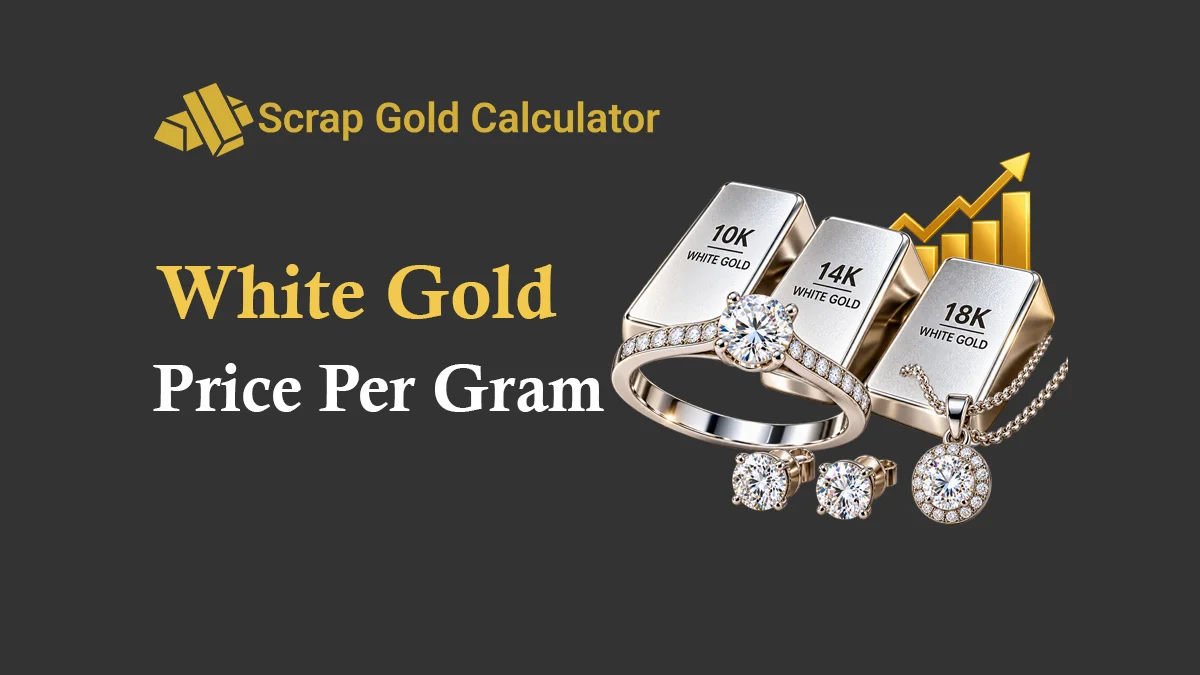
| 10K White Gold | 41.7% | $48.34 | $74.93 | $1,503.39 |
| 14K White Gold | 58.3% | $67.98 | $105.37 | $2,114.14 |
| 18K White Gold | 75.0% | $87.15 | $135.09 | $2,710.44 |
How Much Does 18K White Gold Price Per Gram?
18K white gold is a popular choice for fine jewelry because it contains 75% pure gold and offers a good balance between gold content and everyday wear. To estimate the metal value of 18K white gold, multiply the current 24K gold price per gram by 0.75.
The estimated gold value of 18K white gold would be:
$100 × 0.75 = $75 per gram
That is a simple example, not a current market quote. The final jewelry price can be higher because of alloy costs, design, making fees, and rhodium plating. The above table shows the live market price of 18K white gold price.
How Much Does 14K White Gold Price Per Gram?
14K white gold consists of about 58.3% pure gold.
$100 × 14 ÷ 24 = $58.33 per gram.
This figure represents the estimated gold content value before additional charges. Many hallmarks and buyers use 58.5%, which matches the 585 stamp. You can see the live 14K white gold price in the table above.
How Much Does 10K White Gold Price Per Gram?
10K white gold contains 41.7% pure gold. It is common in the United States in class rings, budget wedding bands, and everyday pieces because it is hard and costs less. This is the lowest white gold price per gram among the common US karats, and it also means less gold value is recovered when you sell. The white gold price of 10K is displayed in the table as above.
How to Calculate the White Gold Price Per Gram?
Calculating the expected white gold price is straightforward while you know the present day 24K gold fee and the karat of your jewelry. The formula is:
White Gold Metal Value Per Gram = 24K Gold Price Per Gram × Karat ÷ 24
Here are the steps to calculate white gold prices:
Step 1: Find the current 24K gold price. Gold is quoted per troy ounce, so divide the spot price by 31.1035 to get the price per gram.
For Example: $90 per gram
Step 2: Check the karat of your jewelry.
For Example: 18K
Step 3: Multiply the price by 18 and divide by 24.
$90 × 18 ÷ 24 = $67.50 per gram.
For a 5 gram piece, the estimated metal value would be: $67.50 × 5 = $337.50.
What Factors Affect the White Gold Price Per Gram?
Several factors affect the white gold price per gram. Here are:
1. Gold Purity
Purity is one of the main factors affecting white gold value. Higher karat gold contains more pure gold, so its white gold price per gram is higher when calculated at the same market price. For example, 18K white gold contains 75% pure gold, while 14K white gold contains about 58.3%. This difference affects the amount of gold in each piece.
2. Current Gold Market Price
Gold prices can rise or fall due to changes in global demand, economic conditions, currency exchange rates, and investor activity. When the market price of gold increases, the underlying metal value of white gold usually increases too. When gold prices fall, its metal value may also decrease. Always check the date and source of a quoted price before using it to estimate the price of jewelry.
3. Rhodium Plating
Many white gold jewelry pieces receive rhodium plating to create a bright white finish. The plating can wear away over time, especially on jewelry that experiences constant friction. Some pieces may need replating to restore their original look. This can create an extra maintenance cost. Rhodium plating is usually a finishing feature, not a reason to calculate the entire piece as solid rhodium.
4. Jewelry Design
The design can affect the final price. Handmade patterns, detailed settings, special finishes, and complex shapes may require more time and skill. A plain white gold necklace and a decorative necklace may have similar gold weights but very different making costs.
5. Gems and Diamonds
Stones add to the retail price, depending on their quality, size, and type. When checking the price per gram, ask whether the quoted weight includes stones. Gold value should be calculated using the correct gold weight, while gems should be valued separately.
6. Brand and Retailer
A piece may cost more than a similar item from another jeweler because of design, service, branding, packaging, or warranty benefits. Compare the full price and the details of each piece rather than deciding based only on its look.
7. Alloy Metals: Nickel or Palladium
White gold is pure gold mixed with white metals. Nickel alloys are common and cost less, but nickel can irritate sensitive skin. Palladium alloys generally cost more to produce and suit buyers who want to avoid nickel. The alloy does not change the formula for the white gold price per gram, but it can change the retail price and how comfortable the piece is to wear.
White Gold vs. Yellow Gold Price Per Gram
Many shoppers wonder whether white gold prices are higher than yellow gold. At the same karat and weight, the metal value is identical.
Feature | White Gold | Yellow Gold |
|---|---|---|
Appearance | White or silver-like | Naturally yellow |
Gold purity | Available in different karats | Available in different karats |
Base gold value | Depends on weight and karat | Depends on weight and karat |
Finishing | May use rhodium plating | Usually does not require rhodium plating |
Maintenance | May need replating | May need polishing or other care |
Common alloy metals | Nickel, palladium, silver | Copper, silver |
Skin sensitivity | Nickel alloys can irritate some people | Usually less likely to irritate |
Resale metal value | Same as yellow gold of equal karat and weight | Same as white gold of equal karat and weight |
White Gold vs Platinum
Platinum is naturally white and does not need rhodium plating. It is also denser, so the same design weighs more in platinum than in gold. Platinum jewelry is usually 95% pure and is priced separately from gold, so compare the total price of each piece instead of relying on the white gold price per gram alone. White gold usually costs less up front, but it needs replating to keep a bright white finish.
Is White Gold a Good Choice for Everyday Jewelry?
It’s also available in easy designs that work for daily use. However, durability relies upon the entire alloy, now not just the coloration. Decrease karat gold can be tougher than some better-karat alternatives, but the precise end result relies upon the metals used and the jewelry layout. Earlier than shopping for a white gold ring, take a look at whether or not it’s far suitable for ordinary wear.
How Much Is White Gold Jewelry Worth When Selling?
The resale value of white gold depends on its purity, net gold weight, current market rates, and the buyer’s offer. It is important to remember that the price you pay in a jewelry store is not necessarily the amount you will receive when selling the same item. Your original purchase price may also include making costs, branding, stones, and rhodium plating. A gold buyer may focus mainly on the recoverable gold content and may not refund those extra charges.
Follow these steps:
Tips for Buying White Gold at a Fair Price
Buying white gold becomes easier when you know what to ask before paying.
Check the hallmark:
Look for a purity mark such as 750 for 18K or 585 for 14K. Hallmarks can help identify the stated purity, although testing may be needed to confirm authenticity.
Compare the full price:
Do not compare only the gold price per gram. Ask for the net gold weight, karat, and stone details in writing. Then calculate the metal value using the white gold price per gram and compare it with the total price.
Check the seller’s reputation:
Buy from a reputable jeweler who can explain the metal composition and provide clear purchase details. These simple checks help you make a more informed purchase and reduce confusion about the final price.
Frequently Asked Questions
Conclusion
White gold price per gram depends on gold purity, market rates, and weight. Making costs, plating, and gemstones can increase the final cost. Always compare prices before buying, and recalculate with the live gold spot price on the day you buy or sell. The most important thing is to understand what you are paying for. A clear price breakdown helps you choose jewelry that fits your style and budget without relying on guesswork.