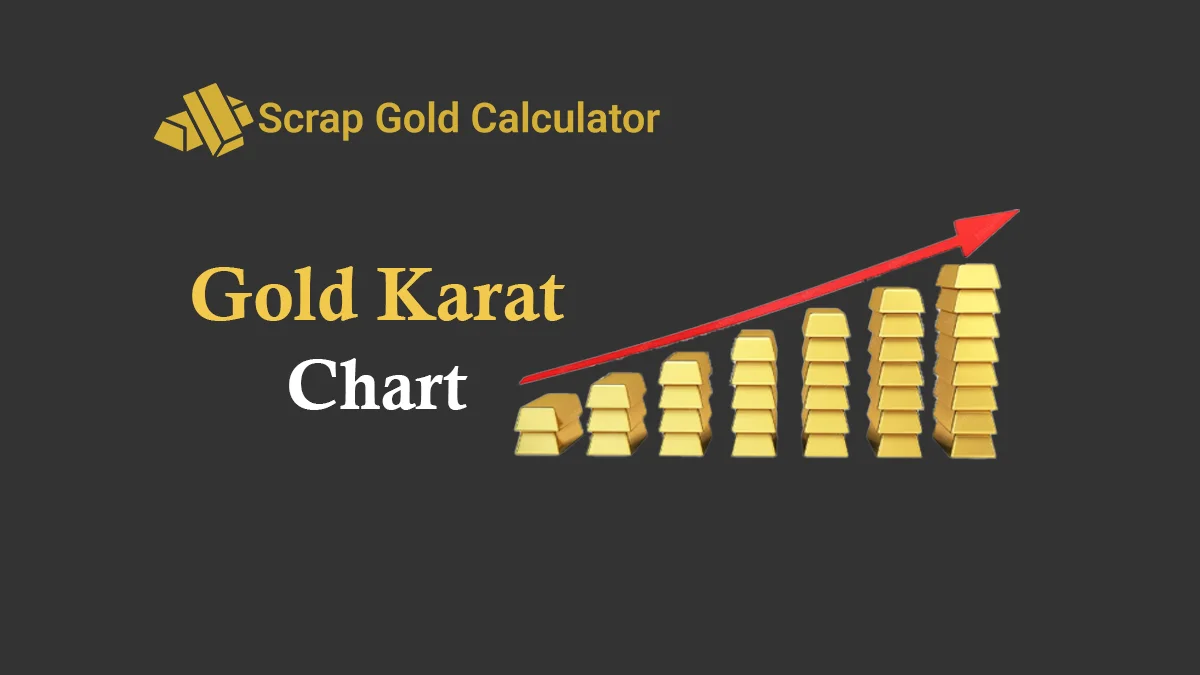
Gold Karat Chart: Gold Purity Explained from 10K to 24K
Have you done jewelry shopping but are completely confused about your jewelry’s gold purity levels, hallmarks, or price differences? Don’t worry, you are not alone. Most people walk into a jewelry store without any knowledge of karats and end up overpaying for jewelry of different karats. A gold karat chart makes it easier for everyone to understand what each karat means and how much gold each 10K, 14K, 18K, 22K, and 24K contains.
In this guide, we’ll break down everything about all karats using a detailed gold karat chart, including how the karat system works, how to read gold stamps and hallmarks, each karat’s durability, common myths, and which karat is best for your specific needs. You will also learn how to verify gold’s authenticity, which will help you buy and sell your gold with confidence.
What Is a Karat?
Karat is abbreviated as “K” and measures the purity of gold in an alloy compared to other metals. The karat scale runs from 0 to 24 parts, where 24 indicates pure gold, while lower numbers indicate gold mixed with alloy metals such as silver, zinc, copper, or nickel.
Here’s a simple formula for Karat: Karat ÷ 24 × 100 = Gold Percentage
Karat vs. Carat: Understanding the Difference
Many people confuse karat and carat because both words sound similar. But they are completely different: one is related to metals, and the other to stones. A gold karat chart clearly separates the two by focusing only on gold purity levels, not gemstone weight. Here’s a simple breakdown:
Gold Karat Scale
The karat scale is based on 24 parts. It tells you exactly how much pure gold exists in any piece.
Here’s the full karat scale with purity percentage:
Karat | Pure Gold Parts | Other Metals | Gold Percentage |
|---|---|---|---|
24K | 24 out of 24 | 0 | 99.9% |
22K | 22 out of 24 | 2 | 91.6% |
20K | 20 out of 24 | 4 | 83.3% |
18K | 18 out of 24 | 6 | 75.0% |
16K | 16 out of 24 | 8 | 66.6% |
14K | 14 out of 24 | 10 | 58.3% |
12K | 12 out of 24 | 12 | 50.0% |
10K | 10 out of 24 | 14 | 41.7% |
9K | 9 out of 24 | 15 | 37.5% |
The scale breaks down purity levels by karat. Higher karats have a higher pure gold content, are richer in color, and are more valuable, but are softer and more expensive. While lower karats are harder, more durable, and more affordable, they contain less gold.
Gold Karat Chart: Purity, Fineness Stamp & Price Comparison
The following gold karat chart covers purity, fineness stamps, hallmarks, price levels, durability, and typical usage for every major karat:
Gold Karat | Gold Purity | Fineness Stamp | Common Hallmark Stamps | Relative Price Level | Durability | Typical Use |
|---|---|---|---|---|---|---|
24K | 99.9% | 999 | 999, 999.9, 24K, 24KT | Very High | Very Soft | Gold bars, coins, investment gold |
22K | 91.6% | 916 | 916, 917, 22K, 22KT | Very High | Soft | Traditional jewelry, Asian and Middle Eastern jewelry |
20K | 83.3% | 833 | 833, 20K, 20KT | High | Moderately Soft | Premium jewelry, regional markets |
18K | 75.0% | 750 | 750, 18K, 18KT | High | Good | Luxury jewelry, engagement rings, designer jewelry |
16K | 66.6% | 666 | 666, 16K | Moderately High | Good | Specialty jewelry |
14K | 58.3% | 585 | 585, 583, 14K, 14KT | Medium to High | Very Good | Everyday fine jewelry |
12K | 50.0% | 500 | 500, 12K, 12KT | Medium | Very Good | Vintage and antique jewelry |
10K | 41.7% | 417 | 417, 10K, 10KT | Affordable | Excellent | Daily wear jewelry |
9K | 37.5% | 375 | 375, 9K, 9KT, 9CT | Budget Friendly | Excellent | Affordable jewelry and fashion jewelry |
Different Karats of Gold Explained
Here’s a complete guide on different types of karats, including their pros, cons, and characteristics. Each karat below is part of the broader gold karat chart breakdown covered in this guide:
24K Gold
24K gold contains 99.9% pure gold with no other metals mixed in. It is the purest form of gold and is valuable for investment. It has a rich, yellow color, but is less commonly used in everyday jewelry.
Characteristics
Pros
Cons
22K Gold
22K gold contains 91.6% pure gold along with other metal alloys. It has a perfect balance between purity and strength.
Characteristics
Pros
Cons
20K Gold
20K gold, which contains 83.3% pure gold, is highly durable. Although it’s uncommon, it has a rich, yellow color, good value, and is suitable for everyday use.
Characteristics
Pros
Cons
18K Gold
18K gold, which contains 75% pure gold, is considered an ideal choice for jewelry. It offers a premium appearance and has a perfect balance between high gold content and durability for everyday wear.
Characteristics
Pros
Cons
16K Gold
16K gold contains 66.6% pure gold, and it is also an uncommon karat. It is rarely used in jewelry or rarely available in jewelry markets.
Characteristics
Pros
Cons
14K Gold
14K gold, which contains 58.3% pure gold, is the most popular choice for jewelry in the United States. Its combination of affordability, durability, and attractive appearance makes it ideal for everyday wear.
Characteristics
Pros
Cons
12K Gold
12K gold contains 50% pure gold and 50% alloy metals. It is durable, but less common in modern jewelry.
Characteristics
Pros
Cons
10K Gold
10K gold contains 41.7% pure gold, and it’s the lowest karat that can be sold legally in the United States as “gold”. It is one of the strongest and most scratch-resistant options for daily wear jewelry.
Characteristics
Pros
Cons
9K Gold
9K gold, which contains 37.5% pure gold, is a popular choice in countries where affordability and durability are prioritized. Although it has the lowest gold content, it offers excellent resistance to wear and tear.
Characteristics
Pros
Cons
How Gold Color Varies by Karat: Yellow, White & Rose Gold
The color of gold jewelry is determined by the karat and the metal alloys used. When reading a gold karat chart, color variation is one of the most overlooked yet important factors to consider:
Yellow Color
The yellow color is produced by metal alloys such as copper and silver. This color is closest to natural gold, and it becomes richer as gold purity increases. Higher karats, such as 24K and 22K, have a deeper yellow color, while lower karats have a lighter color due to a combination of metal alloys.
White Color
White color contains a combination of metal alloys such as palladium, nickel, or silver. It is commonly coated with rhodium to enhance its bright white appearance, which is why white color does not occur naturally in its final jewelry form.
Rose Color
Rose gold contains a higher proportion of copper than yellow or white gold, which creates a pinkish-red hue. Its warm and romantic color makes it a perfect choice for vintage, romantic, and modern jewelry designs.
How Alloy Metals Affect Comfort and Durability?
The metals blended with gold influence more than just its appearance. They affect the jewelry’s strength, comfort, durability, and how it reacts with different skin types. While copper and silver are suitable for most people, nickel is a common cause of skin irritation, whereas palladium and platinum are better options for sensitive skin but usually make the jewelry more expensive.
What Karat Gold Is Best?
The right karat of gold depends on personal use, lifestyle, and investment goals. For engagement rings and fine jewelry, 14K or 18K is best because of their durability, beauty, and value. 22K is perfect for bridal and wedding jewelry for special occasions. For fashion rings, bracelets, and children’s jewelry, 10K or 14K is a good choice due to maximum durability. However, 24K is ideal for investment.
Gold Karats by Country: US vs Europe vs Asia
Gold karat preferences vary across countries due to different traditions, regulations, and consumer demand. Each region essentially follows its own version of a gold karat chart based on local standards and buying habits. A gold karat chart can help you recognize common hallmarks and choose the right jewelry with confidence.
United States
14K is the most common karat in the United States due to its strong durability, appearance, and affordability. 18K and 10K are also very common in engagement rings, wedding bands, and everyday jewelry. 10K is the minimum gold karat that can be sold legally as “gold” in the United States.
Europe
The United Kingdom sets 9K as the minimum standard for gold due to its affordability and durability. In most European countries, 14K or 18K is the dominant karat, where 18K is used mostly in fine and bridal jewelry.
Asia
Many Asian countries prefer higher-purity gold, particularly 22K and 24K jewelry. In markets such as India, China, and parts of the Middle East, gold is mostly used as an investment rather than for jewelry.
How to Read Gold Stamps & Hallmarks
Every legitimate gold piece has a small stamped code. Understanding these stamps is much easier when you use a gold karat chart as a reference for buying and selling your gold.
Numeric fineness stamps: 417, 585, 750, 916, 999
Stamp | Gold Karat | Gold Purity | Meaning |
|---|---|---|---|
999 | 24K | 99.9% | Nearly pure gold, commonly used in bars and investment products |
916 | 22K | 91.6% | High-purity gold, frequently used in Asian and Middle Eastern jewelry |
750 | 18K | 75.0% | Premium jewelry standard used by many luxury brands |
585 | 14K | 58.5% | Popular jewelry standard in the United States and Europe |
417 | 10K | 41.7% | Durable gold, commonly used for everyday wear jewelry |
Gold-plated stamps: GP, GE, HGE, GF
Stamp | Full Name | What It Means |
|---|---|---|
GP | Gold Plated | A thin layer of gold electroplated over a base metal |
GE | Gold Electroplated | Gold is applied through an electroplating process to a base metal |
HGE | Heavy Gold Electroplate | A thicker electroplated gold layer than standard GP or GE |
GF | Gold Filled | A layer of solid gold is mechanically bonded to a base metal core under heat and pressure |
RGP | Rolled Gold Plate | Similar to gold-filled, but with a thinner gold layer bonded to a base metal |
GEP | Gold Electroplated | Another variation of electroplated gold, similar to GE in most markets |
What Is Gold Vermeil?
Gold vermeil is made with a sterling silver base covered by a much thicker layer of gold than standard gold plated jewelry, making it more durable and valuable. In the United States, it must meet specific legal standards, including a gold layer of at least 2.5 microns and a minimum purity of 10K. Unlike regular gold plating, which is often applied over base metals, vermeil offers better quality and longer-lasting wear.
How to Test Your Gold Authenticity?
Here’s a simple guide on how to check your gold authenticity with all reliable methods:
Reading the Hallmark
Reading the hallmark is the very first step in piece verification. Matching what you find to a gold karat chart confirms whether the stamp corresponds to a recognized purity standard. These stamps are normally visible in different locations. Common hallmark locations include:
Professional Methods
Here are the professional methods that help you to identify your gold authenticity when hallmarks are not visible:
At-Home Checks
Other simpler methods can help you to determine your gold potential before seeking professional verification. These include hallmark examination, discoloration checking, magnetic testing, and observation of unusual wear patterns.
Red Flags & Common Fakes to Watch for When Buying
Common Myths About Gold Karats
Myth 1: “Higher karat always means better quality”
Higher karat gold contains more gold, but that does not mean it is of better quality. 24K gold has the highest gold content, but 14K and 18K are most commonly used in everyday jewelry due to their durability, strength, and scratch resistance.
Myth 2: “14K gold is cheap”
There is a misconception that 14K gold is cheap and of low quality. It remains one of the most reliable and widely used standards for fine jewelry. It has a perfect balance of durability, beauty, and value.
Myth 3: “White gold is naturally white”
Pure gold is naturally yellow and does not have any white appearance. White gold is created by combining gold with metal alloys and is often rhodium-coated to achieve its bright, silvery appearance.
Myth 4: “Gold color indicates purity”
The gold color depends on the proportion of pure gold in an alloy rather than its purity alone. Two pieces with the same karat can display different colors depending on the metal alloy combination.
Myth 5: “All 18K gold is the same”
The 18K gold contains 75% pure gold along with other metal compositions. These metal compositions may vary, affecting color, durability, hardness, and even jewelry performance over time.
Frequently Asked Questions
Conclusion
A gold karat chart is one of the simplest ways to understand gold purity, durability, value, and common hallmarks before buying or selling jewelry. Whether you choose 10K, 14K, 18K, 22K, or 24K gold, the right option depends on your investment, lifestyle, and preference. By understanding the differences between each karat using a gold karat chart, you can confidently select gold jewelry that matches your needs and offers the best balance of beauty, strength, and long-term value.